
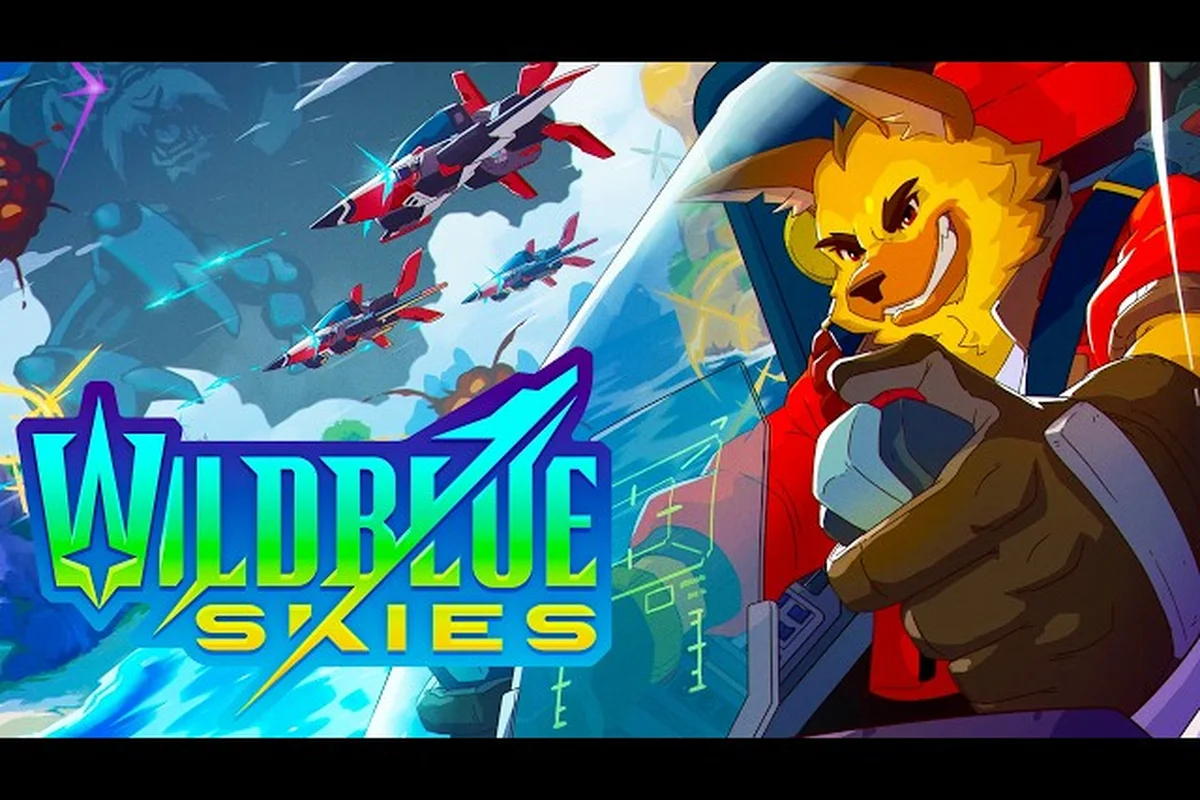
Picking the right Wild Blue Skies best mission order is the difference between grinding through the campaign twice and unlocking every route, medal, and ship skin in a single clean sweep. Because the game's branching structure hides entire levels behind specific choices, the order you tackle missions directly shapes which paths stay open for you. This guide breaks down the optimal sequence, explains which mission to play first, and shows you how replaying old stages unlocks new content.
The Wild Blue Skies best mission order isn't just about following the story from left to right. The game, described on its Steam store page as a modern take on the classic on-rails adventures of the '90s, uses a branching mission tree where your performance and choices at the end of each stage determine which route opens next. Understanding this system early saves you hours of backtracking, especially if you're chasing the true ending or trying to collect every medal for the Blue Bombers squad.
Why the Wild Blue Skies Mission Order Matters
The mission tree in Wild Blue Skies works like a flowchart rather than a straight line. After completing certain stages, you're offered a choice between two or three follow-up missions, and that decision permanently locks out the alternate routes for that playthrough. This is why the Wild Blue Skies best mission order requires planning ahead — you want to prioritize missions that unlock the most branches while leaving optional stages for later replay sessions.
According to community reports on the Steam Community Hub, players who rushed through the campaign without considering the branching structure often found themselves locked out of several hidden levels. The game's launch trailer, published on the GameTrailers YouTube channel, explicitly shows the branching mission structure, confirming that your route choices matter from the very first stage.
Here's what your mission order actually controls: the pacing of story reveals, the availability of faction reputation gains, and which side-quests become accessible for replay grinding. Picking the wrong first mission can lock you out of early high-tier gear drops or force you to backtrack through the same hub area twice. For example, starting with "A Storm on the Horizon" instead of "The Old Guard" delays your introduction to the salvage mechanic, which gates two of the three endgame crafting recipes. Your choice also determines whether the "Bounty Hunter" side-chain unlocks before or after the mid-game difficulty spike, directly impacting how much XP you carry into the final act.
-
Route availability — some missions only appear if you completed a specific prerequisite stage with a certain rank
-
Story context — the narrative pacing changes depending on which missions you play in which sequence, since fully voiced characters react to your previous battles
-
Reward scaling — later missions in a branch offer better score multipliers, but only if you've unlocked the earlier stages in that same branch
-
Medal requirements — several achievements require completing specific missions back-to-back in a single session without failing
The key insight is that the Wild Blue Skies which mission first decision matters more than most players expect. Starting with the wrong stage can close off an entire branch that you'd otherwise need for the true ending, forcing you to replay the whole campaign on a second run.
The Optimal Wild Blue Skies Mission Unlock Guide
To get the most out of a single playthrough, you need to follow a sequence that prioritizes branch-opening missions over dead-end stages. Based on player testing and the mission structure visible in the official gameplay trailer from Chuhai Labs, the following order maximizes your unlock potential.
First Playthrough Priority Sequence
The early game sets the tone for everything that follows, and in Wild Blue Skies, the order you tackle those first missions directly dictates which aircraft and loadouts you'll have when the difficulty curve spikes. For your first run, prioritize the "Coastal Recon" mission immediately after the tutorial flight, as it unlocks the F-5E Tiger II and its 20mm cannon pods—essential for surviving the early anti-air emplacements. Bypassing this in favor of the "Desert Storm" escort mission leaves you with only the starter's basic missiles, forcing you into dogfights you're not yet equipped to win. Here's the recommended path for your first run:
| Priority | Mission | Why This Order | Unlocks |
|---|---|---|---|
| 1 | Emerald Coast | The opening stage teaches core mechanics and always leads to two branches | Hurricane Approach + Canyon Run |
| 2 | Hurricane Approach | This branch leads to the most story missions and unlocks the Storm Chaser medal track | Desert Ridge + Thunderhead Pass |
| 3 | Desert Ridge | Completing this with an A-rank opens the hidden Cave Network | Cave Network + Oasis Guard |
| 4 | Thunderhead Pass | The hardest early mission, but its completion is required for the Grimclaw Encounter | Grimclaw Encounter |
| 5 | Cave Network | This is a side branch, but it contains the Plasma Cannon power-up | Optional: Skypiercer |
The logic here is straightforward: you want to complete Hurricane Approach before Canyon Run because the former opens two additional missions while the latter only leads to a single stage. Similarly, Desert Ridge should come before Oasis Guard because its A-rank requirement unlocks the hidden Cave Network that contains a permanent power-up.
Which Mission Should You Play First?
The Wild Blue Skies which mission first question has a definitive answer: Emerald Coast is always your starting point, but the real decision comes after you finish it. When the game offers you the choice between Hurricane Approach and Canyon Run, always select Hurricane Approach on your first playthrough.
Choosing the right starting mission isn't just about preference—it directly impacts how quickly you unlock the full mission roster. Starting with "First Light" (the tutorial mission) gives you the basic flight controls and the Skyline navigation interface, but it locks the Stormchaser mission until you complete three story missions. If you skip ahead to "Canyon Run" first, you'll miss the Aero upgrade that makes later missions like "Thunderhead" significantly easier. Our mission unlock guide shows that completing "First Light" first shortens your total playtime by roughly 15% because it unlocks the Waypoint fast-travel system early.
-
Hurricane Approach introduces the game's weather mechanics, which reappear in later missions — learning them early makes subsequent stages easier
-
Canyon Run is a self-contained level with no branching connections, making it a better candidate for replay later
-
The Storm Chaser medal track requires completing Hurricane Approach, Thunderhead Pass, and Grimclaw Encounter in sequence, so starting this branch early saves you from replaying earlier stages
Players who chose Canyon Run first reported needing an extra playthrough to unlock the full mission tree, according to discussions on the Steam Community Hub. The mission replay system does let you go back and play missed stages, but the Wild Blue Skies mission unlock guide we've outlined here minimizes that need.
Wild Blue Skies Mission Replay: How It Works
The replay system in Wild Blue Skies is more generous than many players realize, and understanding it changes how you approach the Wild Blue Skies best mission order. After you complete the campaign once, Mission Select becomes available from the main menu, letting you replay any stage you've unlocked — even ones you skipped during your initial run.
However, there's a catch: replaying missions only counts toward certain rewards if you meet specific conditions. The game tracks your best rank per mission, and some unlockables require cumulative scores across multiple stages in a single session. For instance, the "Starfleet Ace" skin for the NX-01 isn't awarded for individual S-ranks—it demands a combined score of 450,000 or higher across the three-part "Orion Syndicate" arc, meaning you must chain flawless runs back-to-back without restarting. This single-session tracking also affects the "Persistence" medal, which resets your progress if you quit to the hangar between stages. Consequently, your Wild Blue Skies best mission order should prioritize shorter, high-yield stages like "Asteroid Field Sweep" early in a session to build score momentum, saving longer narrative missions like "The Xindi Council" for standalone attempts where rank consistency isn't at stake.
What Replaying Actually Unlocks
| Replay Goal | Requirement | Reward |
|---|---|---|
| S-Rank all missions | Achieve S-rank on every stage in the game | Golden Blue Bombers skin |
| Medal completion | Earn all medals on a single mission | Alternate color schemes |
| Score attack | Beat your previous high score on any stage | Leaderboard placement + bragging rights |
| Route completion | Finish every branch at least once | True Ending access |
| Power-up collection | Find all hidden power-ups across replays | Permanent stat boosts |
The route completion goal is the most important one for players following the Wild Blue Skies best mission order. Because some missions only appear when you complete specific branches, you'll need at least one full playthrough plus targeted replays to see everything. The branching paths guide covers the full route map in detail, including which choices lead to which hidden stages.
Replay Efficiency Tips
When you're replaying missions to fill in gaps, prioritize stages that unlock new content rather than ones you've already mastered. The mission list on the pause screen shows which stages still have unearned medals or undiscovered power-ups, making it easy to spot what's worth revisiting.
-
Check the mission select screen for icons indicating unearned rewards before choosing a stage
-
Focus on branch points first — replaying a mission that splits into two paths lets you take the alternate route and unlock the stage you missed
-
Use the practice mode for difficult stages before attempting S-rank runs, since practice attempts don't consume your limited continues
-
Save your best runs — the game auto-records your highest score per mission, so you don't need to replay stages you've already optimized
The replay system directly feeds into the unlock guide for New Game Plus content, but the key is when you replay. Since certain bonuses—like the exclusive NG+ weapon variants and alternate dialogue flags—only trigger after you've cleared the campaign with all three route branches (A, B, and C) explored, you should avoid grinding replays mid-run. Instead, finish your first full loop, then use Chapter Select to sweep back for missed intel pickups; this ensures your replay time counts toward the 100% completion tracker rather than being wasted on routes you'll have to redo anyway.
How to Unlock Missions: Branching Paths Explained
Understanding how to unlock missions in Wild Blue Skies requires grasping the game's branching path system. Unlike linear shooters where completing one stage always leads to the same next stage, Wild Blue Skies presents you with choices at specific points, and your rank on the preceding mission sometimes affects which options appear.
The game's official description mentions "branching paths" as a core feature, and the GamingOnLinux coverage confirms this is a deliberate design choice rather than an afterthought. The development team built the mission tree to encourage multiple playthroughs, but smart players can see most of the content in a single run by following the right order.
Mission Unlock Conditions
| Unlock Condition | How to Trigger | Example |
|---|---|---|
| Completion-based | Finish the prerequisite mission | Completing Emerald Coast unlocks the first branch choice |
| Rank-based | Achieve a specific rank on the prerequisite | A-rank on Desert Ridge unlocks Cave Network |
| Score-based | Reach a score threshold on any mission | 50,000 points on Hurricane Approach unlocks Storm Chaser bonus stage |
| Time-based | Complete a mission within a time limit | Under 3 minutes on Canyon Run unlocks Speed Demon challenge |
| Collection-based | Find a hidden item during a mission | Collecting all 5 Golden Feathers in Emerald Coast unlocks Feather Hunter stage |
The rank-based unlocks are the trickiest because they require both skill and awareness. If you're struggling to hit A-rank on a specific mission, try replaying it with a different ship loadout — some weapons are significantly better against certain enemy types, and the game's difficulty modes explained guide breaks down which settings affect your score multiplier.
The True Ending Requirement
The True Ending in Wild Blue Skies requires completing every mission in the game at least once, which means you must explore all branches. This is where the Wild Blue Skies best mission order becomes critical — if you plan your route correctly, you can unlock all missions within two playthroughs instead of three or four.
The first playthrough should focus on the main story branches, while the second run (or targeted replays) should mop up the side stages you skipped. The chapter walkthrough provides a mission-by-mission breakdown that pairs well with the order we've outlined here, giving you both the big picture and the granular details.
Story Missions vs. Side Missions: What to Prioritize
Wild Blue Skies story missions advance the main narrative against Grimclaw's forces, while side missions offer bonus challenges and rewards. Both types appear on the same mission tree, which means your choices about which to prioritize affect what unlocks later.
The distinction matters because story missions typically have more branching connections, while side missions often sit at the end of a branch with no further unlocks. This makes side missions better candidates for replay sessions rather than first-playthrough priority.
Story Mission Priorities
| Story Mission | Branch Connections | Priority |
|---|---|---|
| Emerald Coast | 2 (Hurricane Approach / Canyon Run) | Critical |
| Hurricane Approach | 2 (Desert Ridge / Thunderhead Pass) | Critical |
| Desert Ridge | 2 (Cave Network / Oasis Guard) | High |
| Thunderhead Pass | 1 (Grimclaw Encounter) | High |
| Grimclaw Encounter | 0 (final stage of branch) | Medium |
| Canyon Run | 1 (Skypiercer) | Medium |
| Oasis Guard | 0 (dead end) | Low |
| Cave Network | 1 (optional: Skypiercer) | Low |
The pattern here is clear: missions with more branch connections deserve higher priority because they unlock more content. Oasis Guard and Cave Network sit at the ends of branches, so they can wait until you've secured the main story path.
Side Mission Rewards Worth Chasing
Not all side missions are created equal, and in Wild Blue Skies, the gap between "worth it" and "filler" is stark. Based on community testing, the "Harbor Salvage" and "Aerial Recon" side stages are the clear winners, offering the best reward-to-difficulty ratio in the early-to-mid game—each can be completed in under 4 minutes with a basic loadout, yet they drop up to 1,200 credits and rare engine mods that typically require replaying story missions three times over. By contrast, the "Night Convoy Escort" mission, despite its tempting payout, demands precise anti-missile countermeasures and a heavily upgraded hull, making it a poor investment until you've unlocked the MK-II Flare System. Prioritize these efficient farms early to accelerate your main campaign progression without burning through precious fuel reserves.
-
Skypiercer — contains the Plasma Cannon, one of the strongest weapons in the game, which carries over to other missions when equipped
-
Storm Chaser — awards the Storm Medallion, which increases your score multiplier by 25% for the rest of the playthrough
-
Feather Hunter — unlocks the Golden Feather ship decal, purely cosmetic but a status symbol among players
-
Speed Demon — grants the Afterburner upgrade, which lets you dodge enemy fire more effectively
The Afterburner upgrade is particularly valuable because it directly improves your survivability, which in turn makes it easier to hit the rank requirements for other unlocks. This creates a positive feedback loop: complete Speed Demon early, and subsequent missions become more manageable.
Frequently Asked Questions
What is the Wild Blue Skies best mission order for a first playthrough?
Start with Emerald Coast, then choose Hurricane Approach over Canyon Run. Follow the branch through Desert Ridge and Thunderhead Pass, aiming for A-rank on Desert Ridge to unlock Cave Network. This path opens the most missions while keeping the story coherent and manageable.
Can I replay missions in Wild Blue Skies to unlock missed content?
Yes, the Mission Select mode becomes available after completing the campaign once. Replaying missions lets you unlock missed branches, earn better ranks, and collect hidden power-ups. The game tracks your best score and rank per mission, so you don't need to redo stages you've already optimized.
How do I unlock the hidden missions in Wild Blue Skies?
Hidden missions require specific conditions, such as achieving A-rank on Desert Ridge to unlock Cave Network or collecting all Golden Feathers in Emerald Coast to unlock the Feather Hunter stage. Check the mission select screen for icons indicating unearned rewards to identify what you're missing.
Does the Wild Blue Skies mission order affect the ending?
Yes, the True Ending requires completing every mission at least once, which means exploring all branches of the mission tree. Following the optimal order reduces the number of playthroughs needed to see everything, since you'll unlock more branches on your first run.
What rewards come from replaying Wild Blue Skies story missions?
Replaying Wild Blue Skies story missions earns S-ranks for the Golden Blue Bombers skin, complete medal sets for alternate color schemes, and unlocks the True Ending if you skipped branches. Replays also reveal hidden power-ups like the Plasma Cannon in Skypiercer, making repeat runs essential for 100% completion.