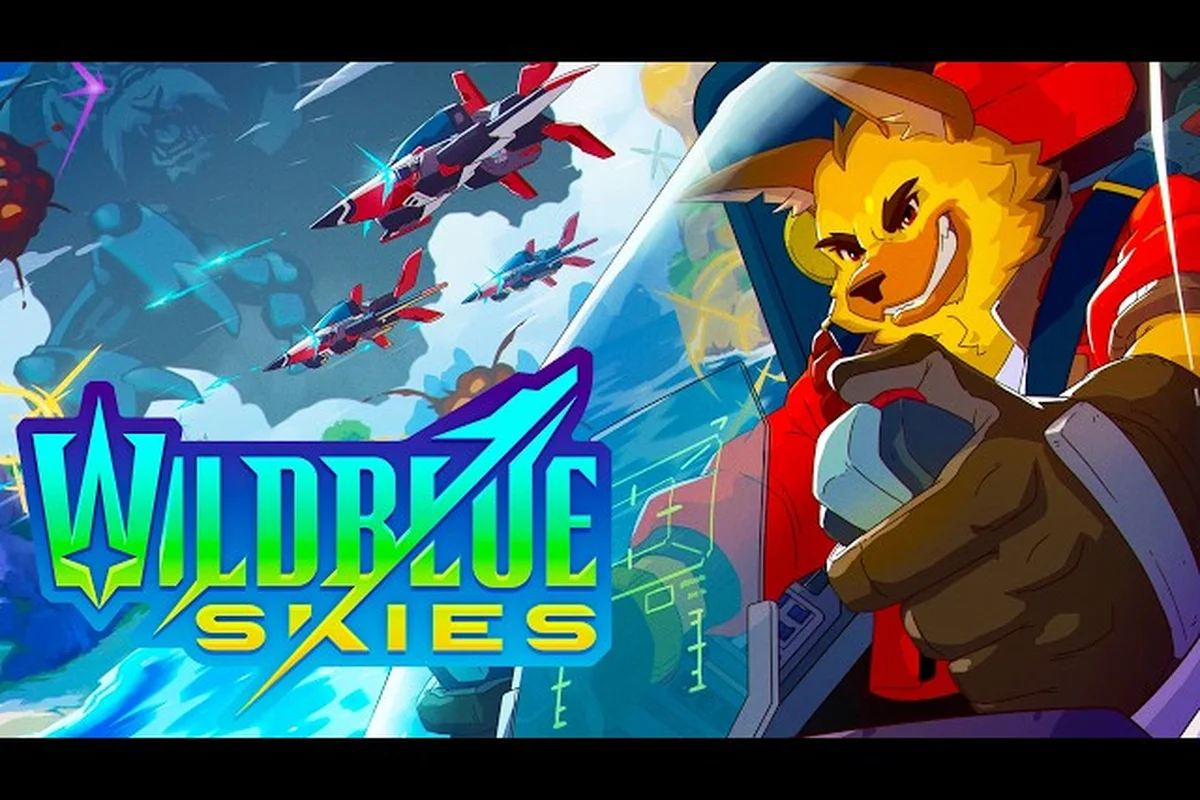
Wild Blue Skies how long to beat is the first question most pilots ask before strapping in, and the honest answer is a 4-6 hour campaign for a standard playthrough. That puts it right in the sweet spot for a modern on-rails shooter: long enough to feel substantial, short enough to replay for medals and high scores without burning out. The real value here is that the campaign length is only half the story, because branching paths, hidden secrets, and a score system that rewards mastery can easily double or triple your time in the cockpit.
What makes this worth knowing before you start is that Wild Blue Skies respects your time while still offering depth. The game, developed by Chuhai Labs and available on Steam, wears its Star Fox 64 inspirations proudly, but it tightens the formula with modern quality-of-life touches and a scoring system that gives every mission a reason to be replayed. Whether you are a genre veteran or someone who just picked up the game on a whim, understanding the time investment upfront helps you plan your sessions and set realistic goals.
Wild Blue Skies Campaign Length Breakdown
Charged Homing Shot vs. Standard Shot: Time-Saving Mechanics
The charged homing shot is your primary time-saver in Wild Blue Skies. Unlike the standard shot, which requires sustained trigger pressure, the charged homing shot locks onto targets, letting you clear enemy formations without precise aiming. Community reviews confirm you cannot hold the trigger to auto-fire as in Star Fox 64, so mastering the charge-release rhythm is essential. On branching-path missions, a well-timed charged shot can eliminate a Grimclaw patrol in one pass, saving roughly 15-20 seconds per encounter—time that compounds across the campaign's 12+ missions.
The core campaign in Wild Blue Skies consists of 12 missions that take most players between 4 and 6 hours to complete on a first run. This estimate comes from community reports on the Steam forums and the official Chuhai Labs YouTube channel, where developer updates have confirmed the mission count and pacing philosophy. The developers deliberately designed the campaign to be beatable in a single sitting if you have the stamina, but the structure encourages you to slow down and explore.
Your actual playtime depends heavily on three factors: your familiarity with on-rails shooters, whether you chase medals on your first pass, and how often you crash into obstacles while learning the boost and brake mechanics. Genre veterans who grew up on Star Fox 64 or Panzer Dragoon will likely land on the shorter end of that range, while newcomers should budget closer to six hours because the game does not hold your hand with the speed mechanic.
| Playstyle | Estimated Time | Notes |
|---|---|---|
| Speedrun focus | 3-4 hours | Skip cutscenes, ignore medals, minimal exploration |
| Standard playthrough | 4-6 hours | Natural pace, some medal hunting, occasional replays |
| Completionist first run | 7-9 hours | All medals, hidden routes, secret unlocks |
| 100% completion | 15-20 hours | Every medal rank, all branching paths, high score chasing |
The training course at the start of the game is worth mentioning here because it adds roughly 15-20 minutes to your first session if you actually engage with it. Community reviews on the Steam store page praise this addition, noting that it teaches the charged homing shot and speed mechanics without feeling like a chore. Skipping it saves time, but you will likely spend that time crashing into walls later while you figure out the controls on your own.
What Affects Your Total Playtime
Several systems in Wild Blue Skies extend the campaign beyond that initial 4-6 hour window, and understanding them before you start helps you decide how much time you actually want to invest. The game is built around replayability, so the question of how long to beat Wild Blue Skies really depends on what you want out of the experience.
Branching Paths and Mission Variety
The most significant time multiplier is the branching path system, which means your first playthrough only shows you a fraction of the available missions. Each branch point offers different environments, enemy compositions, and even boss encounters, so seeing everything requires multiple runs. Community reports suggest that a complete playthrough of all branches takes roughly 10-12 hours, which is substantial for a genre known for short campaigns.
The branching also affects the story, since the fully voiced characters react to your mission choices with different banter and cutscene variations. If you care about narrative context, you will want to replay missions to see how the dialogue shifts, and that adds time on top of the mechanical replay value.
Medal System and Score Attack
Wild Blue Skies uses a bronze, silver, and gold medal system that rewards clean runs, combo chains, and efficient enemy elimination. The score system tracks your performance across multiple categories, and achieving gold medals on every mission is significantly harder than simply finishing the campaign. Players report spending 2-3 additional hours just grinding medals on the harder missions, especially the later stages where enemy density spikes.
The combo system is the core of score chasing, since maintaining a chain requires you to destroy enemies in quick succession without taking damage. This creates a tension between aggressive play and survival, and mastering that balance is what separates gold medal runs from bronze finishes. If you are the type of player who needs to see that gold icon next to every mission, budget extra time accordingly.
Hidden Secrets and Unlockables
Beyond medals, the game hides secret routes and unlockable content that reward thorough exploration. Some missions have alternate exit points that trigger when you complete specific objectives, and these hidden paths often lead to bonus stages or cosmetic unlocks for your aircraft. Finding everything on your own can take 5-6 additional hours, though the Steam Community Hub has player guides that shortcut the process if you prefer efficiency over discovery.
Wild Blue Skies Demo Guide: What to Expect
Before committing to the full campaign, many players want to know what the demo offers and how it relates to the complete experience. The Wild Blue Skies demo is available through the official Chuhai Labs channels, and it serves as a smart introduction to the game's core systems without spoiling the full campaign.
The demo includes the first two missions plus the training course, which gives you roughly 30-45 minutes of content depending on how thoroughly you explore. This is enough time to get a feel for the controls, understand the scoring system, and decide whether the game clicks with you. The demo also carries over your progress to the full game, so time spent learning the mechanics is not wasted.
| Demo Feature | What You Get | Time Investment |
|---|---|---|
| Training Course | Full control tutorial | 15-20 minutes |
| Mission 1 | Standard on-rails level | 10-15 minutes |
| Mission 2 | Introduces branching choice | 10-15 minutes |
| Score Attack | Practice mode with leaderboards | Unlimited |
The demo is particularly useful for understanding the control scheme, which community reviews highlight as a standout feature. Players praise the standard shot and charged homing shot mapping, though some note that you cannot reverse movement or hold down the trigger to auto-fire as you could in Star Fox 64. If you are coming from that classic, the demo gives you time to adjust to these differences before the full campaign throws tougher enemies at you.
Wild Blue Skies On-Rails Shooter Tips for Efficient Play
If you want to finish the campaign efficiently while still enjoying the experience, a few on-rails shooter tips will save you time and frustration. These come from community testing and player reports, and they apply whether you are playing the demo or the full game.
The most important tip is to learn the boost and brake rhythm early, because the speed mechanic is the foundation of everything else. Boosting through open sections builds your combo multiplier, but braking before tight corners prevents the wall collisions that break your chain and cost you precious time. The training course teaches this, but many players skip it and then struggle through the first few missions.
-
Master the charged homing shot for distant enemies, since it locks on and saves you from precision aiming during chaotic sections
-
Prioritize enemy chains over individual kills, because the combo multiplier grows faster when you destroy targets in sequence
-
Memorize enemy spawn patterns on each mission, since on-rails shooters are deterministic and repetition builds muscle memory
-
Use the speed mechanic strategically rather than constantly boosting, since some sections require careful positioning
-
Replay missions immediately after finishing them, while the layout is fresh in your mind, to chase better medals
Another key tip is to ignore the score attack mode until you finish the campaign, because the skills you develop during story missions translate directly to better scores. Trying to optimize leaderboard runs before understanding the mission layouts is a common beginner mistake that wastes time without meaningful progress. The Wild Blue Skies beginner guide covers the control fundamentals in more detail if you want a deeper dive before starting.
Wild Blue Skies Beginner Mistakes That Waste Time
Even with a clear time estimate, many players extend their playthrough by making avoidable mistakes. Recognizing these Wild Blue Skies beginner mistakes before they cost you hours will keep your campaign on track.
The biggest time waster is ignoring the training course, which seems counterintuitive since it adds time upfront. However, players who skip it typically spend far longer crashing into obstacles and failing missions because they never learned the boost timing or homing shot mechanics. The 15 minutes you invest in training saves you at least an hour of frustration later.
| Mistake | Time Cost | How to Avoid |
|---|---|---|
| Skipping training course | 1+ hour of failed attempts | Complete it before mission 1 |
| Holding boost constantly | 30-45 minutes of wall crashes | Learn brake timing |
| Ignoring combo chains | 1-2 hours of bronze medals | Focus on sequential kills |
| Not exploring branches | Missed content, forced replays | Check alternate routes |
| Grinding medals on first run | 2-3 extra hours | Finish campaign first |
Another common mistake is treating every mission like a score attack, which leads to aggressive play that causes unnecessary deaths. The campaign is designed to be completed first, then optimized, so playing conservatively on your initial run is actually faster overall. Save the risky boost-through-everything approach for when you know the enemy patterns and can execute cleanly.
Finally, many players waste time replaying missions for medals before unlocking all branches, not realizing that later missions offer better scoring opportunities. The best mission order guide explains how to sequence your playthrough for maximum efficiency, which is especially useful if you are trying to see everything in fewer total hours.
Wild Blue Skies What to Do First: Priority Checklist
If you are starting fresh and want to make the most of your time, having a clear priority list helps you avoid the aimless wandering that pads playtime without adding value. This Wild Blue Skies what to do first checklist is based on community consensus and developer design intentions.
Your first session should focus on the training course and the first two missions, which introduces all core mechanics without overwhelming you. This is also the perfect time to experiment with the speed mechanic and homing shot, since the early missions are forgiving enough to allow mistakes. The mission difficulty guide breaks down which stages are harder if you want to plan your approach.
-
Complete the training course before anything else, since it teaches mechanics you will use constantly
-
Finish the first two missions to unlock the first branching decision and see how the story reacts
-
Replay mission 2 once to experience the alternate branch, since this is the cheapest branching lesson
-
Check the medal requirements for early missions, since bronze is fine for now but gold targets are useful
-
Save score attack for later, after you have seen most missions and understand scoring opportunities
After that foundation, your next priority is unlocking all mission branches, since that expands the content you can access and gives you more options for medal grinding. The branching paths are the game's main replay hook, so seeing them all early helps you understand the full scope of the campaign. Only after you have seen the majority of missions should you shift into score optimization and high-score chasing.
The Wild Blue Skies Steam page confirms the campaign length and content details at launch.
Frequently Asked Questions
How long does it take to beat Wild Blue Skies?
A standard playthrough of the Wild Blue Skies campaign takes 4-6 hours, depending on your skill level and how much you explore. Speedrunners can finish in around 3 hours, while completionists chasing all medals and branches should expect 15-20 hours total. The demo takes roughly 30-45 minutes.
Is the Wild Blue Skies demo worth playing first?
Yes, the demo includes the training course and first two missions, giving you about 30-45 minutes of content. It teaches the core mechanics, including the speed system and charged homing shot, and your progress carries over to the full game. This makes it a smart way to test the controls before committing.
What is the fastest way to finish the Wild Blue Skies campaign?
To finish quickly, skip the training course if you are experienced with on-rails shooters, ignore medal grinding on your first run, and avoid exploring hidden branches. Focus on completing each mission with a bronze medal and moving forward. This approach typically lands around 3-4 hours.
How many missions are in Wild Blue Skies?
The full campaign has 12 missions, though branching paths mean you will not see all of them on a single playthrough. Exploring every branch reveals additional mission variants and secret stages, bringing the total content to roughly 15-16 distinct mission experiences.
Does Wild Blue Skies have replay value after the campaign?
Absolutely. The medal system, branching paths, and score attack mode effectively double or triple the 4-6 hour campaign. Chasing gold medals demands mastering the combo and enemy chain systems, while leaderboards fuel ongoing competition. Replaying missions to push your rank from bronze to gold is where the real longevity lives.