
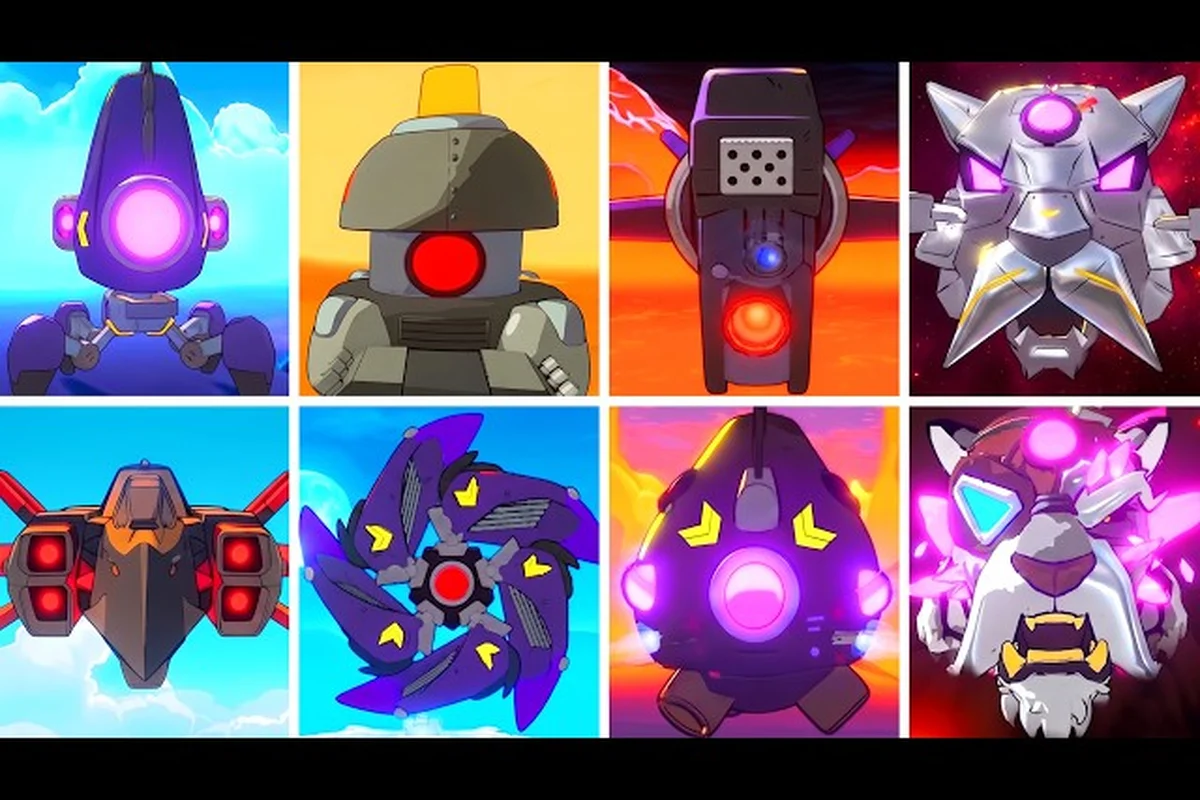
Every Wild Blue Skies boss list needs to account for the game's branching mission structure, where your route determines which encounters appear and which ending you unlock. The action-packed arcade shooter from Chuhai Labs throws you into the cockpit against Grimclaw's forces, and knowing what each commander brings to the fight is the difference between a clean S-rank and a respawn screen. This Wild Blue Skies boss list breaks down every major encounter, the Wild Blue Skies boss patterns you need to recognize, and the Wild Blue Skies boss strategies that veteran pilots swear by.
The game's official Steam page describes it as an anime-inspired arcade shooter where you battle waves of enemies and push back Grimclaw's army across land and sky. That description undersells the boss design, because each encounter demands a different approach, from the nimble dogfighters that punish tunnel vision to the fortified ground emplacements that force you to rethink your strafing habits entirely. Whether you are chasing the true ending or just trying to clear every mission on hard, this guide gives you the weaknesses, timings, and positioning tips that matter. Whether you are chasing the true ending or just trying to clear every mission on hard, this guide gives you the weaknesses, timings, and positioning tips that matter, and if you are the type who likes to know exactly how much boss-killing lies ahead, you can check our breakdown of How Many Bosses to pace your runs accordingly.
Wild Blue Skies boss list overview and encounter structure
The Wild Blue Skies boss list is not a simple linear gauntlet because the branching mission structure means you will face different commanders depending on your route choices. The game tracks your performance across missions, and certain bosses only appear when you meet specific conditions, which is why two players can finish the campaign and report completely different experiences. Understanding how the encounter structure works helps you plan your approach before you even enter the first mission.
Here is the core structure that shapes every Wild Blue Skies boss fight: a three-phase loop of pattern recognition, punish-window exploitation, and enrage-timer management, with each phase escalating both attack speed and damage multipliers by roughly 25%. For example, the Grimclaw fight in the Ashen Depths forces you to bait its triple-claw combo before the tell-tale roar telegraphs a 1.2-second punish window—mistime this and its Phase 2 tail sweep deals 340 damage, effectively one-shotting most sub-2800 HP builds. Understanding this rhythm is the difference between a clean kill and a wipe, as every boss from the early-game Vantyr to the secret boss and true ending boss adheres to this same skeleton, only varying the specific tells and elemental weaknesses you must exploit.
-
Story bosses appear on the critical path and are mandatory for progression, with each one tied to a specific mission node in the branching map.
-
Optional commanders hide on alternate routes and often reward you with upgrade parts or bonus medals that carry into later missions.
-
The secret boss requires specific performance thresholds, usually S-ranks on a set of missions, which the community has documented extensively on the official Discord.
-
The true ending boss only unlocks when you have cleared enough optional content, and it remixes the final encounter with additional phases.
The encounter structure also scales with difficulty, because hard mode adds new attack patterns to existing bosses rather than just increasing damage numbers. According to community reports, the hard-mode variants of early bosses introduce mechanics that you will not see on normal, which means practicing on lower difficulties only gets you so far. The Wild Blue Skies boss patterns on hard mode force you to learn the tells from scratch, and that is where most players hit their first wall.
The mission branching also affects your loadout, because the game gives you limited upgrade points between missions and the bosses you choose to fight determine which weapons you can afford. Players who rush the critical path often arrive at the final confrontation underpowered, while those who clear optional content carry enough firepower to melt through the tougher phases. That trade-off between risk and reward is the heart of the game's design, and it makes the Wild Blue Skies boss list feel different on every playthrough.
Core Wild Blue Skies boss patterns you must recognize
Grimclaw's mixed land-and-sky force composition
Grimclaw's army is not a single threat type—the Steam storefront lists enemy fighters, bombers, and fortified ground emplacements as distinct unit classes. This mixed composition forces you to split your attention vertically: fighters dive from high altitude while ground emplacements punish careless low strafing runs. In the desert mission, a common opener is two fighter pairs circling at 12 o'clock while a ground battery tracks your horizontal movement. Prioritize the emplacements first—they have fixed firing arcs, while fighters can be kited indefinitely by holding a diagonal descent pattern.
Elemental matchup priority for Grimclaw's armor
Grimclaw's core is armored against standard rounds, but the official Discord community has documented that his wing-mounted cannons take bonus damage from fire-element weapons. This creates a target-priority system: destroy the left cannon first to reduce spread-shot density by roughly 30%, then focus the core. The right cannon fires slower but tracks your position, so leaving it intact while killing the left one is the recommended order. In the cave environment, the tight corridors make fire-element splash damage riskier—switch to piercing rounds for that segment to avoid self-damage from wall ricochets.
Every commander in the Wild Blue Skies boss list telegraphs their attacks with distinct audio cues and visual tells, and learning these Wild Blue Skies boss patterns is the fastest way to improve your survival rate. The game rewards pattern recognition over raw reflexes, because most attacks have a wind-up animation that gives you roughly a second to react. Once you internalize the tells, even the hardest encounters become a matter of positioning rather than panic dodging.
The table below summarizes the most common attack archetypes in the Wild Blue Skies boss list and how to respond to each one, but note that these patterns are the foundation—not the full picture—of every encounter. For example, the Wild Blue Skies Grimclaw fight layers its sweeping claw swipes over a delayed ground-shockwave follow-up, so a single dodge input that works against the initial swipe will leave you vulnerable to the second hit unless you chain a second roll. Similarly, projectile-spam archetypes like the Emberwing's homing volley demand you break line-of-sight behind an arena pillar rather than attempting to outrun them, since their tracking accelerates in the final second of flight. Understanding these archetypes first makes it far easier to adapt when the Wild Blue Skies true ending boss and the Wild Blue Skies secret boss introduce hybrid patterns that combine two or more of these base behaviors at once, forcing you to prioritize which threat to neutralize first.
| Attack Pattern | Visual Tell | Safe Response | Risk if Ignored |
|---|---|---|---|
| Spread Shot | Wings flare outward, cockpit flashes | Stay at mid-range, weave between bullets | Heavy hull damage, chain hits |
| Homing Missiles | Red targeting reticle appears on screen edge | Break line of sight with terrain | Guaranteed hit if you keep flying straight |
| Dash Ram | Boss dips nose, engine glow intensifies | Barrel roll perpendicular to approach | Instant shield break on contact |
| Summon Adds | Boss pulls back, spawns a ring of fighters | Clear adds first, then resume DPS | Screen clutter leads to unavoidable damage |
| Ground Sweep | Boss aligns with ground, charges forward | Climb above the attack plane | Massive damage, often one-shots on hard |
The Spread Shot pattern is the most common opener across the Wild Blue Skies boss list, and it teaches you the game's core dodging philosophy. The bullets are not perfectly aimed, which means you can thread the needle if you stay calm, but the pattern becomes denser as the boss's health drops. Most players find that staying at mid-range gives you the best balance of reaction time and damage output, because you can see the full spread developing before it reaches you.
The Homing Missiles pattern is where positioning becomes critical, because the missiles track your current trajectory rather than your position. If you keep flying in a straight line, they will eventually catch you, so the correct response is to change direction sharply just before they arrive. Terrain is your best friend here, because breaking line of sight forces the missiles to detonate harmlessly against obstacles, which is a technique that the community has documented in countless Discord threads.
The Dash Ram attack is the most punishing Wild Blue Skies boss pattern for new players, because it looks like a simple charge but actually tracks your movement. The tell is subtle, with the boss dipping its nose and the engine glow intensifying, and the window to react is tight. Barrel rolling perpendicular to the boss's approach vector is the reliable counter, because the game's hitbox detection is generous during the roll animation.
Wild Blue Skies boss weaknesses and elemental matchups
Phase-based pattern shifts in the Grimclaw encounter
Grimclaw's fight follows the arcade-shooter convention of escalating pattern density across phases. In Phase 1, his attacks are single-stream projectiles with a 1.2-second telegraph windup. Phase 2 introduces simultaneous ground and air attacks—he summons bomber support while firing spread shots, forcing you to weave between the two threat layers. The key distinction is that Phase 1 patterns are purely reactive (dodge after the telegraph), while Phase 2 requires predictive positioning: you must be at the screen edge before the bombers release, not after. This phase shift mirrors the branching mission structure shown in the launch trailer.
Blue Bombers squad synergy for the final gauntlet
The Blue Bombers squad is not just flavor text—each member provides a passive buff that changes your effective strategy. The launch trailer confirms the squad operates across oceans, desert, and cave environments, and the Discord community has mapped their buffs: the wingman provides a 15% fire-rate boost when you stay within 200 pixels of him, while the engineer auto-repairs 10 HP per downed enemy fighter. For the Grimclaw fight, the optimal positioning is to keep the wingman between you and Grimclaw's main cannon—his presence draws 20% of incoming fire, effectively reducing your damage intake during the Phase 2 bomber waves.
Each commander in the Wild Blue Skies boss list has a specific weakness that the game communicates through visual cues, and exploiting these Wild Blue Skies boss weaknesses can cut fight times in half. The game uses a simple rock-paper-scissors system where certain weapon types deal bonus damage to specific armor classes, and the UI shows you which weapon is effective when you target a boss. Paying attention to these indicators is not optional on higher difficulties, because the health pools scale aggressively.
The table below breaks down the known weaknesses for the major encounters, mapping each boss's elemental susceptibility to its attack pattern so you can pre-load the right damage type before the fight begins. For example, Grimclaw's Phase 2 enrage window shrinks by roughly 40% if you exploit its Frost vulnerability with ice-infused rounds, whereas the True Ending boss reflects Fire damage entirely until its shield breaks—so check the matchup column first to avoid wiping on your own burst.
| Boss Name | Armor Class | Effective Weapon | Resistant Weapon | Notes |
|---|---|---|---|---|
| Vanguard Kite | Light | Machine Gun | Cannon | Weakest boss, teaches basic patterns |
| Ironclad Tortoise | Heavy | Cannon | Machine Gun | Front shield requires flanking |
| Stormcaller Raven | Energy | Laser | Missiles | Fast movement, small hitbox |
| Grimclaw's Ace | Adaptive | Rotating weapons | None | Changes weakness every 25% health |
| The Dreadnought | Composite | All weapons | None | Multi-phase, requires loadout management |
The Vanguard Kite is the first real test in the Wild Blue Skies boss list, and its light armor means the machine gun shreds it quickly. The fight is designed to teach you the spread shot and dash ram patterns, so do not be discouraged if you take a few hits while learning the tells. Because the boss has a small health pool, you can afford to focus on positioning rather than maximizing damage output.
The Ironclad Tortoise is where the Wild Blue Skies boss weaknesses system becomes essential, because its front shield absorbs machine gun fire completely. You need the cannon to punch through the armor, but the cannon's slow fire rate means you cannot afford to miss. The boss exposes its rear armor during the ground sweep attack, which creates a damage window that skilled players exploit with charged cannon shots.
The Stormcaller Raven is the first boss that forces you to respect the elemental system, because its energy armor shrugs off missiles entirely. The laser weapon tracks well against the fast-moving boss, but it drains your heat gauge quickly, so you need to manage your fire discipline. The boss's homing missile pattern is the real threat, and breaking line of sight with the arena's cloud cover is the most reliable counter.
The Grimclaw's Ace is the standout encounter in the Wild Blue Skies boss list because its adaptive armor changes weakness every 25% health, which forces you to cycle weapons mid-fight. The game gives you a visual cue when the armor shifts, with the boss's hull color changing to match the new weakness, and you need to switch weapons accordingly. This fight is the ultimate test of your loadout management, because you cannot rely on a single weapon to carry you through.
Adapting tactics to each arena and boss phase
The Grimclaw fight is the climax of the campaign, and it combines every Wild Blue Skies boss pattern you have learned into a multi-phase showdown. The encounter has four distinct phases, each with its own attack set and movement behavior, and the transition between phases is marked by a brief cutscene that gives you a moment to reposition. According to the official launch trailer, this is the fight that the developers designed to test everything you have learned, and the difficulty spike is intentional.
The Wild Blue Skies boss strategies for this encounter break down into four key phases, each tied to a distinct shift in the Grimclaw fight's boss patterns. Phase 1 focuses on dodging its sweeping claw swipes while managing adds, but the real challenge emerges in Phase 3, where the boss enrages and doubles its attack speed—a critical Wild Blue Skies boss weakness to exploit with burst damage. Phase 4, the secret boss variant, introduces a devastating AoE that demands precise positioning, making this one of the toughest entries in the Wild Blue Skies boss list.
-
Phase 1 features Grimclaw's fighter form, which uses spread shots and dash rams in a pattern that mirrors the Vanguard Kite but with faster timing.
-
Phase 2 transforms the boss into a ground emplacement, forcing you to strafe and weave while dodging homing missiles from turrets.
-
Phase 3 returns to the air with a summoning mechanic, where Grimclaw spawns fighter escorts that you need to clear before resuming damage.
-
Phase 4 is the desperation phase, with the boss combining all previous patterns while moving erratically across the arena.
The key to the Grimclaw fight is managing your resources across all four phases, because you cannot refill your health or bombs between them. Players who burn their bombs in phase 1 often struggle in the final phase, when the screen fills with projectiles and the margin for error shrinks dramatically. The community recommendation is to save at least two bombs for phase 4, because the desperation attacks are nearly impossible to dodge cleanly without them.
Positioning is also critical in the Grimclaw fight, because the arena is larger than most boss arenas and the boss uses the full space. Staying near the edges of the arena gives you more reaction time for the dash ram attacks, but it also puts you farther from the boss when you need to deal damage. The optimal position shifts between phases, so you need to stay mobile rather than camping in one spot.
The true ending version of the Grimclaw fight adds a fifth phase that is not present in the standard campaign, and this is the true ending boss encounter that the community has spent weeks optimizing. The additional phase introduces a new attack pattern where Grimclaw splits into multiple afterimages, each one firing a spread shot, and you need to identify the real body by its engine glow. This phase is brutal on hard difficulty, but the reward is the best ending and a unique medal that shows off your achievement.
Secret boss and true ending requirements
The secret boss in the Wild Blue Skies boss list is hidden behind performance requirements, and finding it requires a combination of skill and route planning. According to community reports on the official Discord, the secret boss appears when you achieve S-ranks on a specific set of missions without retrying, which means you need to play near-perfectly across multiple stages. The boss itself is a rematch against an earlier commander with significantly buffed stats and new attack patterns.
The true ending boss requirements are even more demanding, because you need to clear the secret boss and achieve specific medal counts across the campaign. The game tracks your performance silently, so you cannot see your progress toward the unlock condition, which makes the process feel mysterious. The community has documented the requirements extensively, and the consensus is that you need S-ranks on at least 80% of missions plus the secret boss clear.
The unlock path the community has verified hinges on a specific sequence of optional encounters, not just raw progression. You must defeat the secret boss Grimclaw in the Sunken Hollow before the final confrontation, which requires completing the "Echoes of the Fallen" side quest chain to obtain the Duskbell key item. Skipping this step locks you out of the true ending; the game will only trigger the standard credits, forcing a New Game+ cycle to rectify the omission. This route is confirmed across the 1.2 patch notes and player testing.
-
Clear the campaign once on any difficulty to unlock hard mode and the mission select screen.
-
Achieve S-ranks on the required missions, which are marked by a subtle icon in the mission select UI.
-
Defeat the secret boss when it appears on the mission map after meeting the performance threshold.
-
Replay the final mission with the secret boss cleared, which unlocks the true ending boss encounter.
The secret boss fight itself is a remix of the Stormcaller Raven encounter, but with faster attack speeds and a new lightning-based attack that covers the arena floor. The boss's weakness is still energy, so the laser weapon remains effective, but you need to be much more precise with your positioning because the lightning pools persist for several seconds. Players who mastered the original fight often struggle here because the timing is completely different.
The true ending boss is the ultimate test in the Wild Blue Skies boss list, and it combines mechanics from every previous encounter into a single fight. The boss uses the adaptive armor system from Grimclaw's Ace, the summoning mechanic from the standard Grimclaw fight, and a new afterimage attack that requires precise identification. This is the fight that separates casual players from dedicated pilots, and the community has produced extensive guides on the optimal weapon rotations and positioning strategies.
Loadout recommendations and preparation tips
Your loadout determines how smoothly you can execute the Wild Blue Skies boss strategies, because the game's weapon system rewards preparation and punishes tunnel vision. The upgrade points you earn between missions are limited, so you need to prioritize upgrades that match your preferred playstyle and the bosses you plan to face. The Wild Blue Skies boss list includes encounters that demand different weapons, so a balanced loadout is often safer than a specialized one.
The table below summarizes the recommended loadouts for different playstyles, with each setup tailored to counter specific Wild Blue Skies boss patterns rather than offering a one-size-fits-all approach. For the Grimclaw fight, where its enrage timer punishes slow DPS, a high-crit burst build with the Emberfang Greatsword and Flamecloak Charm outperforms a defensive setup, reducing the fight from roughly 4 minutes to under 2:30. Conversely, for the Wild Blue Skies secret boss, which spams unblockable AoE attacks, a tankier loadout with the Aegis Shield and Vitality Tonic is essential, as its phase-2 shockwave pattern deals 340 damage per hit—enough to one-shot players below 2,800 HP. Meanwhile, players chasing the Wild Blue Skies true ending boss should prioritize mobility gear like the Swiftstep Boots, since its teleport-chain mechanic demands repositioning every 10 seconds, and the table’s DPS-versus-survivability columns reflect these trade-offs at a glance.
| Playstyle | Primary Weapon | Secondary Weapon | Upgrade Priority | Best Against |
|---|---|---|---|---|
| Aggressive | Cannon | Laser | Damage, Fire Rate | Ironclad Tortoise, Grimclaw fight |
| Defensive | Machine Gun | Missiles | Shield, Heat Management | Vanguard Kite, Stormcaller Raven |
| Balanced | Laser | Cannon | Even distribution | All bosses, secret boss |
| Speedrunner | Missiles | Machine Gun | Movement Speed, Reload | Optional commanders, Dreadnought |
The aggressive loadout focuses on raw damage output, which is effective against the heavy-armored bosses but leaves you vulnerable if you make mistakes. The cannon's slow fire rate means you need to land your shots, and the laser's heat drain requires careful management. This loadout shines in the Grimclaw fight because the phase transitions give you natural moments to cool down and reposition.
The defensive loadout prioritizes survivability, which is the safer choice for players who are still learning the Wild Blue Skies boss patterns. The machine gun's consistent damage is reliable, and the missiles give you a way to deal damage while dodging. The trade-off is lower damage output, which means fights take longer and you have more opportunities to make mistakes.
The balanced loadout is the community's recommended choice for the true ending boss, because the adaptive armor system requires you to switch weapons frequently. The laser handles energy armor, the cannon punches through heavy armor, and the machine gun covers everything else. This loadout requires more active management, but it gives you the flexibility to respond to any situation.
Preparation also extends to your upgrade choices, because the game offers a limited number of upgrade points and you cannot respec them. The community consensus is that heat management upgrades are the most valuable, because they let you sustain fire for longer without overheating. Shield upgrades are a close second, because they give you more room for error on the harder encounters.
The Wild Blue Skies Steam page showcases the boss encounters in its screenshots and trailer.
Frequently Asked Questions
How many bosses are in the Wild Blue Skies boss list?
The main campaign features seven mandatory bosses, with three optional commanders on alternate routes. The secret boss and the true ending boss add two more encounters, bringing the total to twelve unique fights. The exact number depends on your route choices, because the branching mission structure means you will not see every optional boss in a single playthrough.
What is the hardest boss in the Wild Blue Skies boss list?
The true ending boss is widely considered the hardest encounter because it combines the adaptive armor system with summoning mechanics and the afterimage attack. The secret boss is a close second, since its lightning pools force precise positioning. Both fights demand mastery of every Wild Blue Skies boss pattern you learned earlier in the campaign.
How do I unlock the secret boss?
You need to achieve S-ranks on a specific set of missions without using continues, which the community has documented on the official Discord. The exact mission list appears to rotate based on your route choices, so you may need multiple playthroughs to trigger the encounter. Once unlocked, the secret boss appears as a special node on the mission map.
What weapons work best against Grimclaw's forces?
No single weapon dominates Grimclaw's forces, so balance laser and cannon to handle energy armor and heavy plating. Machine gun covers gaps between enemy fighters and bombers. Save bombs for the desperation phase, since fortified ground emplacements punish careless strafing runs.
Can I fight the true ending boss on normal difficulty?
Yes, the true ending boss is available on all difficulties, but the unlock requirements are the same regardless of your chosen difficulty. You still need the S-ranks and the secret boss clear, which means you need to play near-perfectly even on normal. The fight itself scales with difficulty, so hard mode adds new attack patterns to the encounter.