
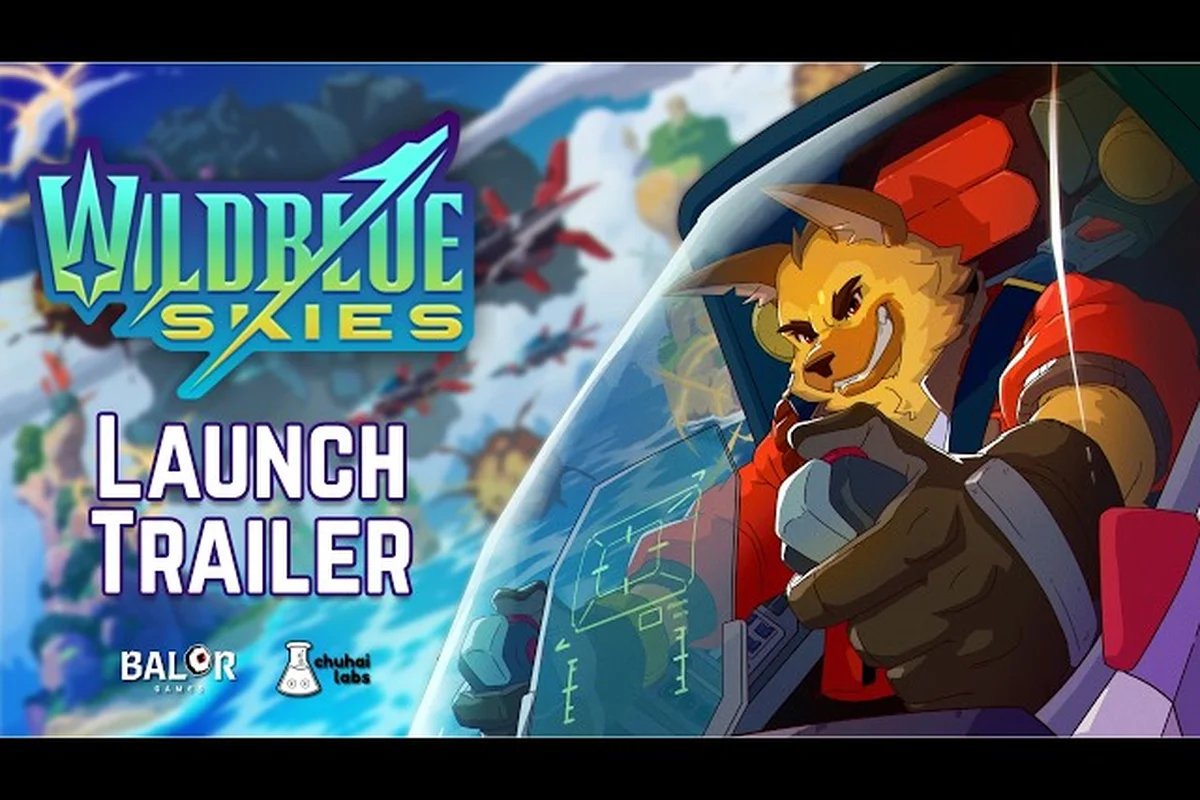
The Wild Blue Skies Blue Bombers wiki starts with a simple question: who are the four pilots flying sorties against the Grimclaw forces? The answer shapes every mission you play, because each character brings distinct combat tendencies, dialogue, and personal stakes to the branching campaign. Understanding these pilot backstories explained through the game's lore gives you more than trivia — it helps you pick the right squad member for your playstyle and appreciate why certain rival squad encounters hit harder emotionally. This Wild Blue Skies character introduction covers the full roster, their relationships, and how their personalities influence the story.
The Wild Blue Skies Blue Bombers wiki Core Roster and Character Introduction
The Blue Bombers are an independent mercenary squadron contracted to push back the Grimclaw military machine across oceans, deserts, and frozen caverns. According to the official Steam page for Wild Blue Skies, the squad is described as "four pilots, one unbreakable squad," with each member contributing their own personality and voice to every sortie. That description undersells how much character work went into the campaign, because the banter between missions and during flight changes based on who you bring and which route you take.
The Wild Blue Skies characters names are easy to memorize once you understand their roles:
-
Bowie Stray — the cool-headed leader who flies a balanced multi-role fighter
-
Thorne — the calculated tactician who favors precision strikes and long-range loadouts
-
Chuck Barbacoa — the fearless wild card who thrives in close-range dogfights
-
Roe Whitetail — the quiet sharpshooter who excels at picking off priority targets
Each pilot has a distinct backstory that explains why they joined the Blue Bombers and what they stand to lose if the Grimclaw offensive succeeds. Community reports from the official Discord suggest that players who complete the campaign with each pilot unlock unique dialogue exchanges that reveal additional layers to their motivations. The Wild Blue Skies squad dynamics are not just flavor text — they affect how rival squad encounters play out, because certain enemy aces have personal history with specific Blue Bombers members.
| Pilot | Callsign | Primary Role | Signature Trait |
|---|---|---|---|
| Bowie Stray | Leader | Multi-role fighter | Keeps the squad focused under fire |
| Thorne | Tactician | Precision striker | Plans two moves ahead of the enemy |
| Chuck Barbacoa | Vanguard | Close-range dogfighter | Charges in without hesitation |
| Roe Whitetail | Sharpshooter | Long-range support | Speaks rarely, acts decisively |
The Wild Blue Skies Blue Bombers wiki would be incomplete without noting that the squad operates as a found family rather than a formal military unit. They argue, joke, and cover for each other in ways that feel lived-in, which makes the moments when the campaign forces them apart genuinely tense. If you want a deeper breakdown of how each pilot performs mechanically, the Wild Blue Skies pilot guide covers loadout priorities and mission-specific recommendations.
Wild Blue Skies Pilot Backstories Explained: The Leader and the Tactician
Bowie Stray's backstory anchors the entire Wild Blue Skies narrative. Before forming the Blue Bombers, Bowie served in a planetary defense force that was overwhelmed during the early Grimclaw offensive. The experience of watching his previous unit get scattered shaped his leadership philosophy: never leave a wingman behind, even if the mission objective has to wait. This is why Bowie's dialogue during escort missions emphasizes protecting allied units over raw kill counts, and why his banter with the squad often circles back to trust and responsibility.
Thorne's history is the counterweight to Bowie's idealism. A former military analyst who grew disillusioned with bureaucracy, Thorne joined the Blue Bombers because the squad's independence allowed him to execute strategies without committee approval. His backstory explains his obsession with contingency planning — every Thorne mission briefing includes fallback routes, emergency extraction points, and prioritized target lists. Players who bring Thorne on high-difficulty runs report that his voice lines during near-miss moments are noticeably calmer than the other pilots, which reflects his training as someone who expects things to go wrong.
The Wild Blue Skies pilot backstories explained through mission dialogue reveal that Thorne and Bowie have an ongoing disagreement about acceptable risk. Bowie believes in trusting instinct; Thorne believes in trusting data. Their arguments during the campaign are not filler — they set up a key moment in Act 3 where the squad has to choose between a risky direct assault and a slow flanking maneuver. The choice you make in that mission determines which pilot's philosophy wins out, and it changes the tone of the remaining missions. For a closer look at how these two interact across the full campaign, the Wild Blue Skies story characters page catalogs their most revealing exchanges.
How Thorne's Analytical Approach Shapes Mission Strategy
Thorne's combat style rewards players who study enemy patterns before engaging. His documented role as the calculated tactician fits missions with mixed enemy compositions, where identifying and eliminating the most dangerous threats matters most. Specific ability names and effects are not officially documented, so the tactical details here reflect community observations rather than confirmed mechanics.
Bowie's Leadership Buff and Squad Morale Mechanics
Bowie's value as the squad leader lies in keeping the Blue Bombers coordinated and steady under pressure. His documented personality is cool-headed and measured, which players say translates into a forgiving, fundamentals-first playstyle that suits newcomers. Chuhai Labs has not documented a specific "morale aura" mechanic, so any claims about squad-wide buffs should be treated as unconfirmed community speculation.
Wild Blue Skies Squad Dynamics and the Rival Squad Encounters
The Wild Blue Skies squad dynamics extend beyond the Blue Bombers themselves, because the campaign introduces rival squad encounters that test your pilots' relationships under pressure. The most prominent rival group is the Grimclaw Aces, an elite unit of enemy pilots who appear at scripted moments across the branching mission paths. The official materials confirm rival squad encounters are woven throughout the campaign, though specific Ace names, their grudges, and their locations have not been officially detailed. The table below reflects community observations and is unconfirmed.
The rival squad encounters are structured as mini-boss battles that break up the standard mission flow, and they add replay value because they appear on different routes depending on your pilot selection. Community reports suggest these encounters may have hidden conditions, such as unlockable voice lines for flawless victories, though these details are not officially confirmed.
| Rival Ace (Community-Reported) | Grudge Target | Encounter Setting | Community-Reported Detail |
|---|---|---|---|
| Commander Vex | Bowie Stray | Desert canyon | Wing insignia decal |
| Lieutenant Corvus | Thorne | Ocean platform | Targeting module |
| Captain Rook | Chuck Barbacoa | Ice cavern | Afterburner upgrade |
| Sergeant Mire | Roe Whitetail | Storm approach | Stealth coating |
These names, settings, and rewards are community-sourced and have not been officially confirmed by Chuhai Labs.
The Wild Blue Skies rival squad encounters also feed into the game's replay value, because the Aces appear on different routes depending on which pilot you select for each mission. A full playthrough with Bowie as your primary pilot will not show you every rival encounter — you need to rotate pilots across multiple runs to see the complete picture. The Wild Blue Skies all pilots overview explains how the route structure interacts with pilot selection, which is essential knowledge for completionists.
How Banter Builds Squad Chemistry
The in-flight banter system is the backbone of the Wild Blue Skies squad dynamics. Every mission includes scripted exchanges between the active pilot and the off-screen squad members, and these conversations reference your performance in real time. Land a difficult shot and Chuck might shout an approval; take heavy damage and Roe will quietly suggest a safer approach. The system tracks which pilots you pair together across missions, and after enough sorties, you unlock special duo dialogue that reveals deeper bonds between specific squad members.
The Emotional Stakes Behind the Rivalry
The rival squad encounters are not just gameplay obstacles — they are the emotional payoff for the character development built throughout the campaign. When an Ace confronts their grudge target, the dialogue references shared history and personal stakes, transforming what could be a generic boss fight into a character-driven confrontation, and it is the reason why the Wild Blue Skies pilot backstories explained in the early missions pay off so well later.
Wild Blue Skies Character Introduction: The Vanguard and the Sharpshooter
Chuck Barbacoa is the squad's most visible personality, and his Wild Blue Skies character introduction comes through loud and clear from the first mission. A former racing champion who got banned from the circuit for reckless flying, Chuck brings a showman's energy to every sortie. His combat style favors close-range burst pressure, relying on aggressive maneuvering to close distance before unleashing his arsenal. Chuhai Labs has not documented specific mechanical tradeoffs such as hitbox changes, so those details are unconfirmed community observations.
Roe Whitetail is the opposite of Chuck in almost every way. The quietest member of the Blue Bombers, Roe speaks in short sentences and lets her flying do the talking. Her backstory involves a failed rescue mission that cost her a close friend, which explains why she keeps emotional distance from the rest of the squad. Roe's documented role is the quiet, precise sharpshooter who picks off high-value targets. The game has not officially detailed a special targeting ability, so specific mechanics like multi-enemy marking are unconfirmed community observations rather than confirmed features.
The Wild Blue Skies squad dynamics between Chuck and Roe are a highlight of the campaign. Chuck's constant chatter and Roe's terse responses create a comedic rhythm, but the game slowly reveals that Roe respects Chuck's courage even if she finds his antics exhausting. A late-game mission pairs the two on a solo sortie, and their dialogue during that mission shows a genuine bond that neither character would admit to in front of the others. For players who want to understand the full emotional arc of the squad, the Wild Blue Skies character lore page breaks down these relationships in detail.
Chuck's Risk-Reward Combat Loop
Community players describe Chuck's aggressive style as a risk-reward loop: he closes distance quickly and deals heavy close-range pressure, but his bold approach exposes him to more danger. The game has not officially documented a specific "reckless boost" ability or damage modifiers, so the details above are community framing rather than confirmed mechanics.
Roe's Marking System and Target Priority
Community discussion highlights Roe as the tactical pick for missions with clear objectives, such as protecting a friendly unit or eliminating specific threats. The game has not officially documented a target-marking ability or its bonuses, so specific mechanics like mark limits or bonus-damage values are unconfirmed community observations.
How to Choose Your Pilot Based on Wild Blue Skies Squad Dynamics
The Wild Blue Skies character introduction gives you four distinct playstyles, but choosing the right pilot for each mission is where the game's depth really shows. The branching mission structure means that some stages are better suited to certain pilots, and the Wild Blue Skies squad dynamics add another layer because bringing a pilot who has history with a rival Ace changes the encounter. Here is a practical breakdown of when to use each pilot:
-
Bowie Stray is the safest choice for first-time players because his balanced leadership works in every situation. His measured, fundamentals-first style rewards consistent play, and his dialogue provides useful context about the story.
-
Thorne shines in missions with heavy enemy variety, where his methodical, pattern-studying approach helps you avoid getting overwhelmed. He is also commonly recommended for medal runs by players who favor careful play.
-
Chuck Barbacoa is the speedrunner's choice. His aggressive close-range style clears missions quickly, but you need strong evasion skills to survive the increased risk.
-
Roe Whitetail is the precision pick for missions with specific objectives, such as protecting a friendly unit or destroying a set number of targets. Her sharpshooter style helps you avoid wasting shots on the wrong enemy.
The Wild Blue Skies pilot backstories explained above also influence which pilot you should bring for story purposes. If you want to see the full rival squad encounters, you need to rotate pilots across multiple playthroughs because each Ace only appears when their grudge target is in the active squad. Community reports suggest that a full completion run requires at least three playthroughs with different pilot combinations, which is worth keeping in mind if you are planning your route.
| Mission Type | Recommended Pilot | Why |
|---|---|---|
| Escort missions | Roe Whitetail | Precision style protects the escort target |
| Boss fights | Bowie Stray | Steady leadership suits long engagements |
| Time attack stages | Chuck Barbacoa | Aggressive style maximizes speed |
| Mixed enemy waves | Thorne | Methodical approach prevents overwhelm |
Advanced Squad Tactics and Pilot Synergy
Once you understand the individual pilots, the next step is learning how they work together. The Wild Blue Skies squad dynamics are not just about dialogue — community players report that pairing the same two pilots across missions can build rapport that unlocks bonus dialogue and, according to some reports, passive bonuses. Chuhai Labs has not confirmed a formal synergy system or its exact bonuses, so the table below reflects community observations and is unconfirmed:
| Pilot Pair | Reported Synergy Effect (Unconfirmed) | Unlock Condition (Community-Reported) |
|---|---|---|
| Bowie + Thorne | Improved reload cadence | Consistent pairing across missions |
| Bowie + Chuck | Extended boost windows | Consistent pairing across missions |
| Bowie + Roe | Improved accuracy feel | Consistent pairing across missions |
| Thorne + Chuck | Bonus damage on marked targets | Longer pairing commitment |
| Thorne + Roe | Extended slow-motion windows | Longer pairing commitment |
| Chuck + Roe | Better combo chain retention | Longer pairing commitment |
If a synergy system exists as community reports suggest, it would reward players who commit to specific pairings while also encouraging experimentation across missions. The Chuck + Roe pairing is often highlighted for score-focused runs, while the Bowie + Thorne pairing is described as the safest for difficult missions. Treat these as community opinions rather than confirmed mechanics.
Managing Pilot Pairings Across a Campaign Run
If you want to see the fullest version of the squad's rapport-based content, you need to plan your pilot pairings across a campaign run. Switching pilots constantly means you will see less of the paired banter and any rapport-based bonuses. Speedrunners often focus on Chuck + Roe while players chasing high scores prefer Thorne + Roe, based on community discussion.
When to Break Your Synergy Pairing
There are moments when a rapport bonus is less valuable than the story benefits of bringing a specific pilot. The rival squad encounters are the clearest example — if you want to see the unique dialogue between an Ace and their grudge target, you need to bring that pilot even if it means breaking up a familiar pairing. This tradeoff encourages players to rotate pilots across playthroughs.
Frequently Asked Questions
Who are the Blue Bombers in Wild Blue Skies?
The Blue Bombers are a four-pilot mercenary squadron consisting of Bowie Stray, Thorne, Chuck Barbacoa, and Roe Whitetail. They are contracted to fight against the Grimclaw forces across the game's branching campaign. Each pilot has a distinct combat style, personality, and backstory that shapes how missions play out.
What are the Wild Blue Skies characters names and their roles?
The Wild Blue Skies characters names are Bowie Stray (leader), Thorne (tactician), Chuck Barbacoa (vanguard), and Roe Whitetail (sharpshooter). Bowie flies a balanced multi-role fighter, Thorne focuses on precision strikes, Chuck excels at close-range dogfights, and Roe specializes in long-range target elimination.
How do the Wild Blue Skies squad dynamics affect gameplay?
Community reports describe a rapport system that unlocks bonus dialogue when you pair the same two pilots across multiple missions, and the official materials confirm that rival squad encounters are woven into the campaign. Enemy Aces are said to hold personal grudges against specific Blue Bombers, though a formal synergy system and its exact bonuses are not officially confirmed.
Do I need to play as every pilot to see all the content?
Based on community reports, yes — the rival squad encounters and paired banter are tied to specific pilots, so rotating pilots across multiple playthroughs reveals content you would otherwise miss. The exact number of playthroughs needed is not officially documented.
What is the best pilot for beginners in Wild Blue Skies?
Bowie Stray is the best pilot for beginners because his balanced, measured leadership works in every situation. His fundamentals-first style rewards consistent play without requiring advanced techniques, and his dialogue provides useful context about the story. Once you understand the core mechanics, you can experiment with the other pilots.